Showing posts with label Japan. Show all posts.

Friday, October 02, 2009

Comment on Expatriates Post

Here's a comment from Christie that's worth quoting in full:

Nice post... I have to stay away from expat message boards, etc., as they are so poisonous.

One thing I've noticed is that young white men who have been here just a couple of years are often still in the "adventure, interesting!" phase, and the really poisonous & bitter ones are the ones who married Japanese women and settled down here. I think it gets to them being powerless, often not speaking Japanese well, having to take a back seat in the extended family, being the only "foreigner" in the family & having their cultural ways marginalized, etc... and they end up wanting to leave the country, but cannot for whatever reason, leading to a trapped feeling. The bitterness just builds, and they end up seeing problems everywhere and hating their lives here.

My husband is not white, and he is *much* *much* more balanced about the good points vs. bad points of living here as a foreigner. He was often bullied and made to feel like a foreigner when he was growing up in England (his parents are from India). He really likes Japan and doesn't stress about the "oh no I am no longer the center of the world" thing. He is also well accepted and liked in Japan, although he looks middle-Eastern. He has not had any higher level of annoyances than I have (a white woman from the U.S.).

I was sorry to learn that you never have had the opportunity to really feel liked and accepted by Japanese people. I know so many nice people here that I think you would like. Partly though, the region I live in is very laid back and accepting.

My negative experiences have been in Tokyo. I'm not very fond of Tokyo. But I love the countryside, where my father's adoptive family originally lived. Sometime in the future I'd love to experience more diversity in Japan, including Okinawa and Hokkaido.

My feeling on the current state of mixed race or foreign children in Japanese schools is that they can do well in many schools & communities, especially if they are naturally sociable (and can overlook or get past initial comments & the occasional bully). However, if they have socialization issues, etc., then their "foreignness" will be used as yet another thing against them, resulting in a double whammy.

I can imagine that. Also, there seem to be several multiracial Japanese celebrities nowadays. It really sounds like Japan is on the verge of a new paradigm of race and immigration. I've become especially interested in following developments of Nikkeijin organizations. I'm always on the lookout for those types of news sources or blogs in English or Spanish. I ran across a neat documentary recently, though most of it is in Japanese and Portuguese.

Tuesday, September 29, 2009

Some Thoughts on Racial/Ethnic Hatred Sparked by Expatriates in Japan

Why do some American expatriates in Japan hate the Japanese so much?

If you're not familiar with this hate... it's some of the most virulent hatred I've ever seen in my life. I've witnessed some of it personally, as a bystander, and indirectly heard of much more.

This isn't all expatriates, of course. For example, my mother was an expatriate for a period of time, and she certainly wasn't like that. She has a lot of critical things to say about Japanese culture, but in a balanced way, in much the same proportion as she would criticize any other culture, including her own.

The most vocal expatriates are young white men on stints teaching English, and it's this group that also has the most evil reputation. But other expatriates types also exhibit this hatred sometimes.

Honestly, people like this are one reason I've never seriously considered going to Japan for any length of time longer than a couple weeks. A long time ago, when I was having a rocky time in college, my parents pressured me psychologically into applying for the JET program. I sabotaged my own application so that I could tell them honestly that I was denied. As someone who is not fluent in Japanese, and doesn't really belong to any community in Japan, I knew I would have to be in close contact with this type of expatriate, and I could not stomach the thought of that.

This hatred seems especially disturbing to me because I understand where it comes from. I've been treated badly by Japanese. The first time I was aware of race, and being racially different, was in Japanese kindergarten. In general, Japanese are not particularly friendly to me. To Japanese, I don't look Japanese, I don't dress Japanese, I don't even walk like a Japanese, and in Tokyo, I'm treated with distant politeness or ignored as if I don't exist. My own father sometimes casually insults my identity and accuses me of not being Japanese enough.

As a result, I often don't like Japanese. I enjoy having casual conversations with Japanese tourists in other countries about stuff like food, but I don't purposefully seek them out or go looking for deeper friendships with them. There are some exceptions, like my roommate in Mexico that I felt very close to. He was considering immigrating permanently to Mexico, and had different ideas about identity than the vast majority of Japanese.

But I don't hate Japanese. Based on my personal history I have some hang-ups and neuroticisms about Japanese that I wish I didn't have, but I do, so I compensate in practical ways. Otherwise, I just think of Japanese as human beings... flawed, complicated human beings, like all other groups of human beings.

I'm not going to provide lists and examples of bad expat behavior. You're either familiar with it or you're not, and if you're not, then you're lucky. But here's the basic arc:

Stage 1: I love Japan. Japan is so cool. It's so different over here. I can't wait to meet some samurai and geisha. I'm fulfilling my lifelong dream. This is going to be awesome.
Stage 2: Japan isn't what I thought, but it's still really cool. All these Japanese girls are having sex with me just because I'm an American. Sometimes I get the feeling people are looking down on me. Oh well, if I just smile a lot and speak Japanese better, I'm sure they'll accept me.
Stage 3: Culture shock, aching loneliness and deep depression
Stage 4: Retreating and retrenching in a safe womb-like environment with other expats
Stage 5: F%#@ these racist, xenophobic Japanese. Japanese women are manipulative stuck-up $%!@s. I wish we'd bombed ALL of Japan. I'm rude to them all the time now so I can get back at them for treating me like they do. And I can't wait to get home.
Stage 6: Now that I'm home, the bad memories of Japan are fading a bit, thank goodness. I have returned a much wiser person. I know all the weak spots of the Japanese now. In fact, I'm an expert on Asian culture. I explained this to an Asian-American once but they violently disagreed with me. Oh well, they're not a real Asian anyway.
(Alternate Stage: Stay in Japan, let hatred die down to a bilious rumbling with occasional explosions.  Post regularly on f*ckedgaijin.com).

Sexuality and misogyny and the legacy of imperialism are big parts of all of this. Imagine the expat arc as a dysfunctional romance, with Japan as the woman, and you could encapsulate most of those stages in the immortal words of Marion Barry: "Bitch set me up!"

The sex/imperialism is also an angle that's been covered by theorists quite extensively. I'd like to approach the issue from another angle, a more comparative and personal one, based on my experiences with born citizens and immigrants as well as expatriates.

Have I ever encountered the same level of hatred toward Americans? No, but I came close, once in Mexico, and once in the U.S.

When I was in Mexico, I met a lot of people who criticized the U.S. I largely agreed with the criticisms, and they were stated in a fair way. In fact, Mexican leftists who had problems with U.S. politics were always MORE charitable than U.S. leftists. They would often talk about aspects of the U.S. that they admired, such as our history of relatively fair elections. I never saw this criticism spill over into hate, though.

I also met a lot of Mexicans who were treated very badly in the U.S. and still didn't develop hatred. For example, I met a taxi driver in Guadalajara who told me that he risked his life to cross the desert to find work in Dallas, but the people there were so racist and unfriendly, it took him only three weeks to decide to go right back to Guadalajara. Maybe they're nicer in other parts of the U.S., he noted optimistically, though he had no further plans to ever leave Mexico again. Another Mexican I met spent six years in prison in Florida for a crime he claimed he didn't commit, and he still had a lot of good things to say about the U.S.

And I don't think that people leashed any hatred simply because they didn't want to offend me, an American tourist. If I was white, I might think that. But Mexicans often find it hard to believe I'm an American, even after I state it quite clearly. I don't "look American". It's a reaction I encounter frequently anywhere outside the U.S., and I've developed a pretty thick skin about it.

Anyway, one night while I was traveling in Mexico by myself, I ended up in a crowded taxicab going to a nightclub. Since we had to go a long way on a dirt road, and most of my fellow taxi goers had already had a few drinks, the conversation was heated and lively. There were a couple Mexicans and an Austrian tourist. The Austrian tourist, on hearing I was American, launched into a diatribe against American cultural imperialism. We made crappy movies, and crappy music, and crappy food, our American crap was drowning out everyone else's culture, all our entertainment was vulgar, and so on.

I got angry. I was prepared to hear this sort of thing from a Mexican, but not from an Austrian. Most Europeans have enough money and power to consume their own crap if they want; they happen to CHOOSE to consume ours. I tried to argue back, but he kept interrupting me. So I dropped the bomb. "Well what's your native way of having fun on the weekend in Austria? Burning Jews?" The Mexicans all gasped. The Austrian visibly wilted, and said in a small voice, "that was a long time ago". The conversation shifted. We'd put on a good show for the Mexicans, though: they looked like they were really enjoying the argument from the sidelines.

To this day I feel a little bad for cutting down the Austrian like that. But only a little.

Although I said I was prepared to hear this kind of diatribe from a Mexican, I never did. My overall impression was that Mexicans were rather light on the criticism when it came to the U.S. For every thing they hated, they knew something that they loved. Sadness, disappointment, anxiety, yes; hatred, no.

When I lived in Miami, I worked in a series of restaurants and bars. There was an informal but very powerful racial/ethnic hierarchy pretty much everywhere I worked in the service industry. White Anglos, upper-class Cuban-Americans and diverse upper-class immigrants/expatriates (usually European) were at the top. They were the owners and managers. The middle was composed of more Cuban-Americans and Anglos. Halfway between the middle and bottom were native African-Americans and whiter-looking Latinos. On the very bottom, recently arrived Carribean black people (Haitian, Jamaican) and other Latinos (such as Central Americans). Your place in the hierarchy was determined by 1) money 2) degree of whiteness 3) degree of blackness 4) kind of English spoken 5) kind of Spanish spoken 6) citizenship and documentation status. Since Miami is such a diverse and chaotic environment, new arrivals often weren't quite sure where they fit in the hierarchy. I know I was never sure, myself.

One day, I was outside my restaurant having a smoke break with the Jamaican janitor/busser. We struck up a conversation that quickly took a disturbing turn. She started on a rant about how the American black people were all thieves, liars, drug abusers, could not be trusted, made her people look bad, and so on. I just told her I didn't think that was a fair thing to say, but I didn't want to get in an argument with her. I felt sorry for her because she was facing a horrendous level of racism from the manager, a white Frenchman who was racist against everyone who worked there, but picked on her the most.

I wondered later, why did she hate African-Americans so much? Why not hate white people or white Europeans? After all, the manager truly was an evil worm of a person (full story of his evilness here).

One reason is that it's not very common to hate upwards. It's more common to fear the people who have power over you. If you can't separate from those people (people with separatist ideologies can hate in any direction), you have to learn how to get along with them.  And you don't have the energy to spare for hate.

When I was dealing with racist abuse in school in the U.S., I felt the same way. I didn't have time to hate the people who abused me. All my emotional energy was wrapped up in trying to answer two questions: "Why are they doing this to me?" and "How can I make them stop?" In order to try and stop the abuse I had to think like my abusers, I had to put myself in their shoes, I had to imagine how they saw me, I had to imagine how they would react if I did certain things as opposed to doing other things.

I could not afford to hate them.

I think it's much more common to hate downwards. And a subset of hating downwards is hating sideways. My Jamaican coworker was financially on a lower level of the hierarchy than African-Americans, but she also realized she was on a higher level when it came to stereotypes of morality and culture. That is, she observed that there were more negative sentiments against African-Americans than there were against Jamaicans. So hating African-Americans was a way to claim a higher position in the hierarchy, a way to claim that no, she was not on the same level or lower, she was really on a higher level.

Whenever someone is insecure about their position in a hierarchy, a way to stabilize your position is 1) find someone who is on the same level or slightly lower 2) hate them.

I think this works in the area of class, as well. Often, the people who say they hate the poor the most are the people who have escaped poverty, or who are lower-middle-class and almost in poverty. Really rich people rarely hate the poor. They can ignore them and/or exploit them without going through the bother of hating them.

An expatriate in Japan, once they hit the culture shock stage, becomes incredibly confused about their place in the hierarchy. This confusion is compounded by the fact that they don't even understand, on a visceral level, that the hierarchy even exists. The ideal of egalitarianism is very strong in the U.S. When that egalitarianism actually works, I love it. It's what makes my country great. But it's an ideal, not a reality. If you believe it's already a reality, you become blind to the existence of totally real hierarchies lying underneath the mask of egalitarianism.

People from countries with more formalized race, caste and/or class systems have more experience, more cynicism and more ability to notice parallel structures in foreign countries. They'll have a more practical attitude. "OK, I've landed. Where am I? Near the bottom... darn. Can I work my way up? Oh, it looks like this system is really rigid. Only a few rungs? What about my kids? Well, I'll adjust my expectations and see if it's worth the trade-off."

The Japan-hating expatriate has huge privilege from being some combination of white, American and male. Japanese give them a lot of room. When they act badly, Japanese will simply ignore it. The expatriate senses weakness. "They let me get away with bad behavior - that means I am better and stronger than them - I hate them because I am better than them - I am better than them because I hate them." But the expatriate also starts to understand that the Japanese don't really need them. Japan is pretty much the richest non-white country in the world when it comes to economic power and median living standards. The expatriate may start penning angry rants about Japan, but there is nothing they can really do to get any kind of meaningful revenge in a collective sense. Though they can be very cruel to individual Japanese, and then later, to Asian-Americans.

They realize the sheer uselessness of their hate, and it makes them hate even more.

I wish I had a better note on which to end this piece! 

Friday, August 28, 2009

A Japanese Man Who is Even More Eccentric than My Dad

This video is an absolute must-watch.  He sort of reminds me of Billy Corgan, something about the forehead...

Sunday, August 16, 2009

"The Miracle Noodle"

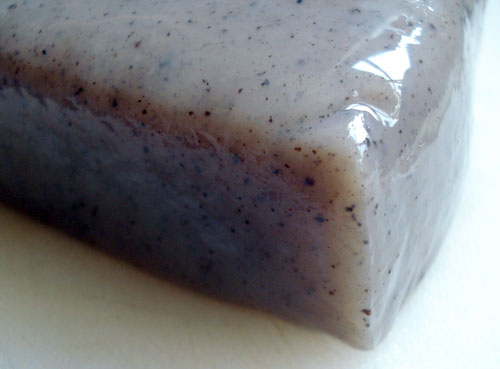
I happened to see a text ad in my Gmail this morning... "The Miracle Noodle Japanese Women Eat to Stay Thin." This stupid ad sparked my curiosity. I followed the link, and quickly discovered that the Miracle Noodle is nothing but vile konnyaku. Konnyaku has featured in this blog before. It tastes like solidified mucus.

I've never understood its popularity in Japan. My mother has a good theory, though: the Japanese palate is less sensitive to taste but more sensitive to texture. So Japanese cuisine features a lot of food items that don't taste like anything (or taste like solidified mucus) but add interesting or unique textures to the meal.

Go ahead and check them out if you're interested, I'm sure they're healthy... I eat a fairly low-carb diet, but I will definitely not be buying any Miracle Noodles.

Tuesday, June 23, 2009

Family History, National History

We spent our family vacation in Washington DC. It was awfully nice. I already know the area fairly well from the time I spent long ago as an au pair working for a family in the Maryland suburbs.

One day, we drove all the way down to Jamestown and its historical museum. I loved the exhibits, which covered the culture of 1) the English settlers 2) Powhatan Native Americans and 3) Angolans of dubious status (perhaps slaves, perhaps indentured) who all once lived in or near Jamestown. One exhibit covered a fascinating bit of history that I never knew before: the colonization efforts were based on a pattern already established... in Ireland. The goal was establish an ethnic enclave while extracting wealth from the natives (Irish cattle-herders/Powhatan farmer-hunters) using a combination of trade and force, then send money back to England.

We watched a museum movie which showed that life in Jamestown was pretty much hell on earth for the first English settlers. During one famine, some people dug their own graves, laid down in them and just waited to die. Jamestown wasn't very successful, which was why the Pilgrims are usually thought of as the first real settlement colony for the United States.

One of my ancestors on my mother's side was a Jamestown settler. His name was William Farrar, and he came over in 1618 from Lincolnshire. That's one of the main reasons I'm interested in Jamestown (although I'm not a full-fledged genealogy person).

Sunny had a vacation journal in which he had to write five sentences for every day. He liked the museum, and the ship we saw in neighboring Yorktown, but also wrote that hearing about all the Indians killed in Jamestown made him sad.

Sunny's favorite museum, of course, was the National Air and Space Museum. There are plenty of cool things to touch and pull and push and climb... it's a wonderland for a kid his age.

We took a tour through the WWII Pacific room. I looked for an exhibit on Japanese soldiers, but all they had was a single one on kamikaze pilots. I don't really blame the museum, since there weren't many exhibits on German soldiers in the other hall, either. But I do wish the Japanese could have been represented by something other than kamikaze pilots. I didn't draw it to Sunny's attention. Too complicated.

I did point to a picture of a Japanese battleship and explain that Ojiichan's father died when American fighter planes sunk his battleship. Because Ojiichan's father, my grandfather, died and sunk to the bottom of the ocean, we never got to meet him. I said that the Japanese were on the wrong side in the war and the Americans were on the right side, so it's a good thing we Americans won, but it was still a very sad thing that Ojiichan's father had to die like that.

Sunny said, "If I was around back then, I would save Ojiichan's father!" What a sweet boy.

Later on, we had dinner with my Guy's colleague who lives in DC. This was the first time I'd ever met her, although she and Guy have been friends for a while. She's a Japanese-American woman one generation older than me. I told her about what Sunny had said in the WWII Pacific exhibit, and she remarked, "My father was probably trying to sink your grandfather's battleship." She explained that in WWII her family had all their property seized in California and were taken to an internment camp, and from there her father volunteered, and ended up in the Pacific translating Japanese communications for American military intelligence.

Some people can't afford to be bitter and angry about the past. We have to remember, but we also have to move on. I thought of grief and letting go, and our strange relationship to WWII, when I read this recent article about the aftershocks of a war that's even further away in time.

Sunny said that he didn't understand hardly anything Guy's friend had just explained. I told him it was all very complicated history, but he would understand more when he got older.

Thursday, June 12, 2008

My Dad Has Gone Out of His Mind

My dad hasn't been around due to some important appointments he needs to keep in Japan, but he will be visiting in August. We've been updating him on Sunny.

I was worried he would be too extreme when it comes to food. Sunny is not a picky eater according to his foster family's standards -- after all, he'll eat salad and broccoli -- but he is a very picky eater when it comes to our family's standards.

I don't want to turn it into a battle. At each meal, I cook at least one thing I know he'll eat. Then he gets more of that thing if he eats the rest of his food, or alternately, he'll only get dessert if he tries a few bites of the new food. If he complains, I'll just say, sympathetically, "that's too bad you won't get any dessert then!" If he doesn't eat any of it, I just clear his plate and we finish dinner.

Let me present, as a contrast, the way my dad used to discipline me at the table whenever I stayed with him in Japan.

- "Dad, I really don't like konnyaku, could you leave out the konnyaku chunks on my plate please?"
- "No."
- "Please Dad!"
- "GO TO HELL!"

- "Hold your o-hashi correctly! Your technique is embarrassing!"
- ""
- "You stupid American! GO TO HELL!"

- "Dad, please remember I'm a vegetarian now, so can I have soup without minced lamb please?"
- "It's not lamb, it's mutton!"
- "Well, if you have to put it in the soup, could you please not mince it up so finely, so that I can actually pick the pieces out of the soup?"
- "YOU ARE A HOPELESS STUPID CLUMSY DAUGHTER! I DON'T CARE ABOUT YOUR VEGETABLE STUPIDITY! GO TO THE HELL!"

I hope this goes to explain why I was a bit nervous about having my dad and Sunny at the same dinner table.

Tonight, my father asked me if Sunny was eating well and if I was cooking for him. I told him things were going pretty well, but Sunny didn't eat everything on his plate and he didn't even try his squash. Then my father said:

"Go slow! Be patient!"

My jaw dropped open. Then he asked me if Sunny was in bed. I said yes, his bedtime was 8:30pm.

"Don't be too harsh with him!"

I guess I don't have to worry about Ojiichan yelling at Sunny. But I feel sort of bitter... damn, I wish he could have been that mellow when I was a kid.

Friday, March 28, 2008

Oe Victorious!

I have had a huge amount of respect for Mr. Oe ever since I read his masterpiece, "A Personal Matter". His body of work on modern Japanese identity is incredible and thought-provoking. He's an uncompromising gadfly and it's nice to see him come out on top.

Suit Against Writer in Japan Dismissed

Published: March 29, 2008

TOKYO — A Japanese court has rejected a defamation lawsuit against Kenzaburo Oe, the 1994 Nobel Prize Laureate for literature, agreeing with his assertion that the Japanese military was deeply involved in the mass suicides of civilians in Okinawa at the end of World War II.

In a closely watched ruling, the Osaka District Court threw out a $200,000 damage suit on Friday that was filed by a 91-year-old war veteran and another veteran’s surviving relatives, who said there was no evidence of the military’s involvement in the suicides. The plaintiffs had also sought to block further printing of Oe’s 1970 book of essays, “Okinawa Notes,” in which he wrote of how Japanese soldiers told Okinawans they would be raped, tortured and murdered by the advancing American troops and coerced them into killing themselves instead of surrendering.

“The military was deeply involved in the mass suicides,” Judge Toshimasa Fukami said in his ruling on Friday. Judge Fukami cited the testimony of survivors that soldiers handed out grenades to civilians to commit suicide with, and the fact that mass suicides occurred only in villages where Japanese troops were stationed.

The defamation lawsuit, filed in 2005, was seized upon by right-wing scholars and politicians in Japan who want to delete references to the military’s coercion of civilians in the mass suicides from the country’s high school history textbooks. Last April, during the administration of the former prime minister, Shinzo Abe, the Ministry of Education announced that references to the military’s role would be deleted from textbooks.

Some 110,000 people rallied in protest last September, in the biggest demonstration in the prefecture since the early 1970s. The protests, as well as Mr. Abe’s resignation and his replacement by Prime Minister Yasuo Fukuda, a moderate, led the Ministry of Education to reinstate most of the references in December.

The about-face was an embarrassment for the Japanese government, which has always denied accusations by China and South Korea that it engaged in historical whitewashing, and has asserted that its school textbooks are free of political bias.

“The judge accurately read my writing,” Mr. Oe, 73, said at a news conference.

Tuesday, March 25, 2008

The Lesson of Hiroshima for the U.S. Presidential Election

(cross-posted at APA for Progress)

Earlier this year, I had the privilege of hearing a presentation by a Hiroshima survivor. Here's his story as I remember it.

Mr. Teramoto was ten years old when the atom bomb hit Hiroshima. One second he was leaning over a desk to write a postcard to a friend; the next second he was on his back amid the rubble of his former house. An aunt pulled him out. His face was covered in blood. He begged her to stop and rescue his mother too, but she was too focused on getting him to safety. She slung him across her back and ran away.

That was the last he ever saw his mother. He found out later that she had dragged herself out and made it to the bank of the river. She died within days and her body was cremated where it lay, next to so many others.

Sheltering by another bank, Mr. Teramoto remembers seeing the river filled with corpses. They floated up and down with the tide, the same ones over and over again. He showed us photos and also drawings representing these scenes.

Art by KIHARA Toshiko, Hiroshima survivor


Due to his position when the bomb hit, and the fact that he managed to escape exposure to contaminated water, Mr. Teramoto is still a vigorous and healthy man. He draws on this energy to educate people about what happened in Hiroshima. He's been giving talks like this for decades. I imagine that survivor's guilt is something he struggles and negotiates with constantly. He's chosen to relive those events over and over again so that others can grow to understand the lesson of Hiroshima.

The basic lesson is simple. This must never happen again. Whether the bombing was "justified" is of secondary relevance. Here in the U.S. discussions of Hiroshima and Nagasaki can get bogged down in that debate. As a Japanese-American, I feel the issue very deeply. Many Japanese-Americans fought bravely against Japan's government, a military dictatorship that poisoned other countries and their own people as well. But I also believe racism was an integral part of the decision to drop not one but two atomic bombs on Japanese soil.

But the primary matter of importance is what the past of Hiroshima symbolizes for our common global future. This is the idea that Mr. Teramoto wants to spread all over the world.

The events of Hiroshima are receding. The cold war era is over. In my lifetime, there will eventually be no more survivors traveling the world and giving presentations. But there will still be insane numbers of nuclear weapons and the potential for a future conflagration.

Mr. Teramoto's colleague, the head of the Hiroshima Peace Culture Foundation, put forth a terrifying scenario. Further destabilization in Pakistan and Afghanistan. Increased anti-American activity in the mountainous border region. Militaristic American government. The solution? Perhaps just one targeted atomic bomb. Maybe some villages will be caught in the way...

The current idiotic regime has substantially withdrawn from nuclear nonproliferation and disarmament agreements, citing, of course, the increased security risks of a "post 9/11 world". John McCain is even more likely to use nuclear weapons, judging by his strong tendency towards loathsome paranoid jingoism. Either Clinton or Obama would be a massive improvement and would likely get us back on the path to honoring our nuclear treaties.

Personally, I'm an Obama supporter, and I believe he will be better on this issue. While it's difficult to detangle candidate's position statements to find an unequivocal answer to a relatively simple question, several factors convinced me. During one debate, Wolf Blitzer asked the candidates whether U.S. security concerns trumped humanitarian concerns. Clinton responded that yes, they did. Obama gave what I considered the correct answer; the two concerns cannot be separated. Also, Clinton's vote in favor of the Iraq War showed me that in a crisis, she might go by current popular opinion instead of the long-term best interests of the world. Obama has specifically stated that he will not consider using a nuclear weapon to destroy a terrorist training camp. Clinton's answers on nuclear nonproliferation have also been much more equivocal and vague than Obama's answers.

Anyone who is concerned by this issue (and I think "anyone" should really mean "everyone in the world") should do their own research and act on it. Here's a relatively neutral link to start off with.

I was profoundly affected by Mr. Teramoto's talk. I hope I've been able to pass on to readers even a small portion of the urgency and gravity of his mission. This must never happen again.

Monday, November 19, 2007

Violence, the Pathologies of Identity and a Desperate Longing for the Islands of the Mind

Warning: this piece is extremely long and rambling. It's about the things mentioned in the title, illustrated through some of the more unpleasant aspects of the lives of three people, including myself. It's revisiting a lot of things I've written about over the past year of this blog.

The most painful part of this piece was trying to write about Central Florida. I haven't done it very well. Every time I try to paint a picture in words I usually give up and starting sputtering and yelling things like "the pit, the pit."

So as a quick preface, sorry, Central Floridians. I hate that place. But there are some beautiful things there.

-------

When I was young I was always under attack in school. Whenever I left the safety of my home I had to put my head down and got ready for the inevitable.

I don't know exactly what to call what I went through. The word "bullying" minimizes it too much. It brings to mind a heavyset, mouth-breathing boy shaking other kids down for their lunch money… Nelson Muntz from the Simpsons. The kind of boy who rules the playground, but won't get very far in adult life.

A more accurate word would be "racist abuse." The scary part was that the abusers were completely unpredictable. One day I'd sit next to a girl or boy and have a nice conversation about dinosaurs, and the next day they'd follow along me singing "Chinese, Japanese, dirty knees, look at these." These weren't sadistic kids from abusive homes. There were too many of them for that to be the case. Most of them were totally average.

I tried a lot of things to get it to stop: logical arguments, emotional appeals to stop hurting me, pretending that I couldn't hear or see them. For a little bit I thought if I could wear clothes from Benetton and The Limited, they would stop. My family's financial situation was comfortable, but we weren't that well off, so I never found out if wearing more expensive clothes would have helped. The only thing that helped, a little bit, was physical violence. The one time I used my fists and knocked down a girl, that made them keep their distance. They didn't yell in my face anymore; they stayed at a distance or left notes on my locker instead.

Recently I've wondered whether part of my psychic survival was due to my body. I've always been tall and broad-shouldered. I got my height from my Japanese father. Being tall made me stand out as a target, but it also made me look more powerful. They never managed to make me feel ashamed about my own body, although in the girl's locker room, they tried hard enough.

When I went to college in Miami, for a brief time a young woman lived next door to me and we ended up having an intense talk once that touched on all this. She was Latina, from the north, tall -- even taller than me -- and dark-skinned. I usually didn't talk about what I went through in school, and she was one of the first people I'd ever met who had some of the same experiences and was willing to talk about it. Like me, she was raised surrounded by white children who abused her. She told me she was so full of rage that when she was a teenager, she used to go nightclubs, pick fights with white girls and beat them up. She would pretend they had spilled a drink on her, or looked at her the wrong way. She said she was ashamed now, but also in a better place. It had taken her a long time to "find herself" and stop raging.

For women, the price of wielding violence is often heavier than receiving it. We're taught from an early age that boys who fight are natural, but girls who fight are vicious and freakish. Anyway, I left that intense conversation incredibly thankful that beyond that one time, I'd never used physical violence.

Both of us felt that those children had stolen something from us, and we had to fight to get it back. The second and truly healing step was to stop fighting to get it back. What we were looking for was not in their power to give back. We had to find it in ourselves.

The third person with identity issues I want to talk about is an old friend of my husband. This friend, who is white, used to live in Atlanta but he's moved far away and we don't talk to him much anymore.

He grew up near the same Florida town that I did. His family was a wreck. He ran away from home to escape his abusive father and was taken in by a group of skinheads. Unlike Miami, where white-power types understandably keep a very low profile, I knew that the skinheads in that other Florida town would be of the Nazi type. They'd taken over the scene and run off the anti-racist skins during that time period. The friend, who was painfully and exhaustively honest about everything else in his life, didn't like to talk about that time.

Later on, after he moved to Atlanta, he had a year-long relationship with an out gay black man. Then he decided he was straight and they broke up but stayed friends.

My husband's friend was a short and small-framed man. He loved to read books, drink, get into fistfights, talk about his emotions, cry, and discuss his Irish heritage. It's the Irish heritage thing that truly fascinated me. My husband told me all about his friend before we met for the first time. He told me his friend had a large IRA tattoo on his arm. Had he ever visited Ireland? Nope. I was astounded. I was even a bit mean to him the first time we met. "Why do you have the Italian flag tattooed on your arm?" I asked.

My husband, who has just as much Irish heritage as his friend, had gone through many long arguments about the IRA before. He was so sick of the topic that he never brought it up anymore.

I thought the tattoo was completely insane. A healthy way to explore your heritage would be through positive things like joining an Irish-American historical society, learning Gaelic, visiting Ireland… it's what I would think of from my perspective as a Japanese-American. Why jump into a conflict whose struggles you haven't lived? It seems patronizing to the people who have lived those struggles, the ones who stayed behind.

I believe it makes a huge difference whether your ancestors arrived as entrepreneurs, indentured, enslaved, rich, or starving and desperate... but it makes a huge difference in the new country. In the old country, the division is simpler. Some stayed, some left.

Japan and Ireland have an interesting emigration history in common. In the 19th and early 20th century, they were poor countries. Many left for a better life. Now, they're rich. Irish and Japanese nationals are not in much danger of being exploited by the descendants of those who left. Still, I think it's disrespectful for me to assume I know what's best for Japan because I have Japanese heritage. I have a lot of opinions on their politics as a human being and global citizen, but unless I actually move there and exercise my citizenship, I don't want to go beyond that.

In Miami, many of the ones who left another island - Cuba - thought they would be going back. But their children are already forgetting their Spanish. I visited Cuba once, and I noticed the feelings that Cuban nationals have for Cuban-Americans are very complicated. There's love, because many of these people are friends and relatives. There's also anger. "We've lived here. We stayed. We know what's best for our own country, not you, the ones who left for a richer one."

The Japanese-British author Kazuo Ishiguro left Japan at the age of two. He said once in an interview that he thought he would be going back when he was a child, and he built up an imaginary Japan that was very precious to him. As he became an adult and realized he could never really go back, and that England was his home, he had to say goodbye to that imaginary Japan, and did so by putting it in his book An Artist of the Floating World. I never had that. When I left Japan I was old enough, at six, to remember it more as reality than fantasy, and to understand I was never coming back. My parents never gave me any illusions on that point… I'm not saying that bitterly. I'm actually glad. I had enough problems without having to deal with an imaginary Japan floating just beyond reach. Still, Ishiguro's words are very moving for me.

My husband's friend, a very intelligent man, had a blind spot when it came to his own claimed island. He had to defend it from the English. It gave him a purpose, a goal, an identity. He had mellowed out a lot by the time I met him, but my husband said he used to see him get into bar fights all the time. He could destroy men twice his size because he moved so fast and hit so hard.

Luckily, there aren't many Americans, especially in Atlanta, who have strong feelings for the other side. He may have wanted to get into fights over Ireland, but that wasn't likely to happen here, thank goodness. Now he's married with a kid and I don't think he fights anymore.

The idea of Ireland must have given him a lot of comfort over the years. Perhaps it was also part of a reaction against the Nazi skinheads who idolized England. We grew up in the same horrible, horrible place, but we knew there was something else out there beyond the Central Florida suburbs and strip malls. I had the luxury of growing up in a supportive family; he had to break a pool cue over his father's head. I had part of my childhood stolen by racist abuse; he had almost all of it stolen. I could go on like this for a while. Our similarities and differences are endlessly fascinating to me. Perhaps it's because he was so open about how he formed his identity, when most people, especially white people, are ruled by shame and defensiveness when it comes to this topic.

All three of the people I've talked about are lucky. We came out the other side. Instead of abusing other people and abusing ourselves, we're moving forward. Sometimes I wonder if I'm really a whole person, but then again, even if I'm not, so what? Human beings can go through life missing huge chunks of themselves. Wholeness can mean healing, or it can mean the impossibility of change and growth.

Wednesday, August 15, 2007

Joe is Japanese

I just read about this at Racialicious. It's an upcoming web animation called "Joe is Japanese", based on life stories from a hapa in Japan.


I've sometimes wondered what my life would be like had I stayed in Japan instead of going to America after kindergarten. I also have a very un-Japanese name! I don't think my life would have been impossible, but it would have been very, very hard.

Here's what Joe says:

The show is based on (mostly) true events from my life. It wasn’t easy growing up a half-breed. No one culture will ever be yours to embrace. No matter how hard I tried, I could never really be Japanese, and as I got older I realized that I might have overcompensated and became too Japanese. You’d have to be Japanese to understand what I mean by that one... :-P

... I get to tell random stories like that. Stories that made up my life… they made me into what I am today, (mostly) Japanese.

Monday, August 06, 2007

Anniversary of Hiroshima Bombing

Well, I'd thought today would be a day free of complaining about racism. Sadly, this is not to be.

I was reading this short post about the Hiroshima anniversary. I clicked through to one of the video clips, but I couldn't watch it because I got too distracted by some of the nasty comments. Why are Youtube video comments such disgusting cesspools? That's a rhetorical question... it seems like any audiovisual type of communication with semi-anonymous comments always ends up that way. As a side note, I'm very interested, from an internet anthropology perspective, as to why that happens.

I am not going to reproduce any of the comments but it's quite typical stuff as to how "the japs" deserved it.

For what it's worth, I feel very ambiguous about the historical necessity of the bombing of Hiroshima. My father suffered from a terrible infection around that time, and he told us that the only thing that saved him was antibiotics his parents bought on the black market, and the antibiotics originated from American troops. Given the dire wartime circumstances, if Japan had not been defeated so rapidly, he would almost certainly have died. So by a certain twist of fate I would not be alive today if it weren't for the bomb.

What I am not ambiguous about... the bombing was a terrible atrocity. It should never happen again, anywhere, to any country. It makes me so sad to know there are people out there like those commenters -- many people -- who would deny humanity to the bombing victims, both the ones that died that day and the ones who slowly withered away from the aftereffects over decades.

Racism encourages the belief that something inherent in Japanese blood and culture that caused their ferocity in World War II. In reality, it's something that could have happened to any group of people infected by fascism. Japan is a complicated country with a complicated history. A hundred years ago it was very different, and a hundred years from now it will be very different. It is not some unchanging ahistorical bizarro-world created to evoke alternating awe and revulsion by credulous Americans.

There's a great interview between two master novelists - Kazuo Ishiguro, British nikkei, and Kenzaburo Oe, the Japanese Nobel Prize winner, that really encapsulates the complexity I'm trying to portray. Like my father, Oe grew up in a rural Japan that has almost vanished. Oe talks in great detail about what it means to be Japanese, not by claiming that his vision of Japan is superior, but by saying that he speaks from the margins, and still has as much right as those who claim to speak from the center. Ishiguro talks about how his Japanese identity slipped away, and how he became a "homeless writer", not Japanese and not fully English either.

Here's a passage from a different interview with Oe, about Hiroshima.

Finding a Voice in Tragedy

The birth of your son was the turning point in finding your voice as a writer. You have written that "Twenty-five years ago, my first son was born with brain damage. This was a blow, to say the least. Yet as a writer, I must acknowledge the fact that the central theme of my work throughout much of my career has been the way my family has managed to live with this handicapped child."

Yes, precisely. I wrote it.

When I was twenty-eight years old, my son was born. When I was twenty-eight years old I was a writer, a rather famous writer on the Japanese scene and I was a student of French literature. And I was talking in the voice of Jean-Paul Sartre or [Maurice] Merleau-Ponty. I was always speaking about everything of this work. But when my son was born with very big damage in his brain, I found out one night, I wanted to find encouragement, so I wanted to read my book -- that was the first time I read my book, [the only] book that [I'd] written up to that date -- and I found out a few days later that I cannot encourage myself through my book; [therefore] no one can be [encouraged] by my work. book cover So I thought, "I am nothing and my book is nothing." So I was depressed very strongly; then I was asked by a journalist who was editing a political magazine in Japan to go to Hiroshima, the place the atomic bomb [had been] dropped. There in Hiroshima, in that year the peace movement -- the anti-atomic bomb movement -- was meeting, and in those assemblies there was big fight between the Chinese group and the Russian group. And I was the only independent journalist there. So I criticized both of them.

I found the hospital of the Hiroshima survivors and there I found the very great Dr. [Fumio] Shigeto. In conversation with Shigeto and the patients in the hospital, I gradually found that there is something that encouraged me, so I wanted to follow this sense that there is something. So I returned to Tokyo and went to the hospital where my [newborn] son was, and talked to the doctors about rescuing my son. Then I began to write about Hiroshima, and this was the turning point of my life. A kind of rebirth of myself.

So there was an interplay between what you saw in the victims of Hiroshima and also very importantly what you saw in observing the doctors who were treating the victims. What you observed somehow moved you to another plane in dealing with your own personal tragedy?

Yes. Shigeto said to me, "We cannot do anything for the survivors. Even today we don't know anything about the nature of the illness of the survivors. Even today, so shortly after the bombing, we don't know anything, but we did what we could do. Every day a thousand people dead. But amidst the dead bodies, I continued. So, Kenzaburo, what can I do except that, when they need our aid? Now your son needs you. You must find out that no one on this planet needs you except your son." Then I understood. I returned to Tokyo and began to do something for my son, for myself, and for my wife.

Your novel about the birth of your handicapped son is called A Personal Matter, and your writings on Hiroshima are collected in Hiroshima Notes. You write in the latter: "When the Hiroshima doctors pursue the A-bomb calamity in their imaginations, they are trying to see more deeply and more clearly the depth of the hell into which they too are caught. There is a pathos in this dual concern for self and others; yet it only adds to the sincerity and the authenticity that we sense...." You are saying that in seeing this duality in the doctor, you were helped to see the complexity of the dilemma of Bird, the protagonist in your novel.

Yes. Until then, my little theme was a duality or ambiguity of human beings. [This concept] came from existentialism in France. I think I found out the true duality and how I can be so-called "authentic." But the word "authenticity" must not be so frozen in my case. I used the word from Jean-Paul Sartre. Today I would use another word. It is very simple. I wanted to be strictly an upright man. The Irish poet Yeats said in his poem, "The young man who stands straight." Straightforwardness. Erect. This kind of young man that I wanted to be, but then I used the word "authentic."

Lionel Trilling wrote that confessing to your feelings is one of the most courageous and valuable things a writer could do. That's what you did in A Personal Matter.

Yes. I wanted to do so. At the time I didn't think of the value of being an upright man. I [felt I] must write about myself. Why not? I cannot be reborn and my son cannot be reborn, I felt, [if I don't]. So when I was by the sea [I decided that] I must rescue myself and I must rescue my son. So I wrote that book, I think.

Tuesday, March 06, 2007

Spot the Hapa

We found this photo while digging around in some old family albums. It's my Japanese kindergarten class. The photo is very unflattering... my cheeks look weird! Actually, it's unflattering to everyone. We all look like someone just took our lollipops away.

I remember kindergarten as being a mostly fun, happy, playful time. I loved my teacher (the woman in the purple sweater).

After kindergarten, we moved away from Japan.

Sunday, February 11, 2007

The Day I Learned All My Grandparents' Names

(For another post on this same topic, see Clan Loyalty, Genetics, and Fear of Heights)

This is very exciting for me. I knew a few of my paternal grandparents' when I was 10, when I was given a family tree assignment in school. But dad only wrote down his adoptive parents, and besides that he wrote them in Japanese so I didn't how they were pronounced. I lost that tree a long time ago.

This morning we had a large breakfast of the typical style I described a few days ago. My mother came by as well, then left after breakfast to meet my stepfather and so some gardening.

Dad seemed very relaxed, sitting back and reading the Sunday New York Times.

I asked him if he could do a favor for me and he gave me a suspicious look.

"I'm putting together a scrapbook. Could you write down your family tree?"

"My family tree is too withered."

"Just anything you can remember. You don't have to write it in English." I gave him a sketchpad and walked off and did something else for a while.

He wrote down his adoptive mother and father, in English.

"Could you add in your adoptive sister? And your biological parents?"

"Too many names! I don't remember."

"I know you know your biological father's name."

I walked off again.

He drew a dotted line to "biological FA". He gave his biological father's real name and pen name. I know he was a left-leaning intellectual in the early 20th century. The pen name is a major, major, major piece of information. With a bit of quiet help from someone living in Japan, I could find some kind of biography. Over his adoptive parents' names he put "stepfather" and "stepmother".

"You know your biological mother's name, don't you?" I walked off again.

He put his mother's name, "biological MO" and a notation that she was not married to his father.

"THAT IS IT! NO MORE!"

I took the hint and removed the family tree. "Thanks Dad!" It's now scanned and uploaded to my private Flickr account. Whew. This was a lot easier than I thought it would be.

Saturday, February 03, 2007

Checkout


We picked up my father today from the hospital. It took all morning to check him out. He's doing very well.

I think the doctors have done a great job with his surgery, but I get so mad at the way the system treats patients when it comes to rehabilitation. Ankle fusion surgery takes only a few hours but the full recuperation period is around six months, and there's usually two months of no weight bearing. You would think that doctors provide detailed rehabilitation advice on how to get through daily life, but it's not the case. The best resource I found was message boards and Yahoo Groups of people who've already had the surgery.

It was because of advice from a forum that I rented a roll-walker. That's one of the goofy-looking devices pictured to the above left. My dad would never have thought to get one on his own. Yesterday, I asked the doctor if the cast might cover the knee and interfere with the use of the roll-walker or roll-a-bout. He gave me a funny look and said that my dad was too active to use one of those, they were only for very inactive or obese people, and he might as well just use crutches to get around for two months. I can't even begin to say how bad that advice was. Thank goodness I'd already rented one by then, and the cast isn't too high to interfere with use. My dad has immediately picked up on the walker and loves it. There's no reason at all to use crutches, except for going up or down steps. It looks like he'll be taking the walker into the kitchen soon and cooking a lot of his own meals, which is ideal because he loves to cook.

In Japanese culture, doctors are gods. It's scary seeing my dad, who is a fearless questioner of authority, transform into a timid, apologetic, childlike person when faced with someone in a white coat. I've heard that it used to be common practice in Japan to lie to patients for their own good. "I think Mr. Sato only has a few weeks to live. But I'll go ahead and tell him that his cancer is in remission, so he and his family can really enjoy those few remaining weeks!" That was one of the reasons for pushing for the procedure to be done here in America. It's not that the doctors are better (I think they're very skillful both here and in Japan) but the family is here in America to sit with my dad and ask reasonable questions.

I've also broken down and finally added an "ankle fusion" category to the labels. I've been talking about it so much this month, I might as well.

Monday, January 22, 2007

A Japanese Immigration Story

I touched on Japanese-Brazilians in a previous post entitled "Some Japanese are Insufferable Ethnobigots". I'm fascinated with their situation, and that of other Latin-American descendants of the Japanese diaspora. Their history is noble but tragic. In fact, they can be considered among immigration history's worst losers. Their ancestors rolled the dice and, economically speaking, came up with snake eyes. If they had stuck it out in Japan, their descendants would probably be enjoying one of the highest standards of living in the world. Instead, they're now Brazilians and Peruvians.

I've never been to Brazil, but I once visited Peru in the waning days of the Alberto Fujimori presidency. It has terrible problems of poverty, much worse than Mexico. The Japanese-Peruvians were better off than most Peruvians. This is because they have the right to get work visas in Japan. On the streets of Peru there are tons of right-hand drive microvans, some still with Japanese lettering on the side. Japanese-Peruvians buy them used in Japan and bring them over, or Japanese charities donate them to Peru.

I have certain Japanese citizenry rights through my father. My husband asked me recently what I could do in Japan (not that we have the slightest intention of emigrating there). I could get a work visa and with my teaching experience, probably find decent employment as an English tutor or teacher. But other returning ethnic Japanese, the nikkeijin, wouldn't be so qualified. If all they spoke was Portuguese or Spanish, they'd more likely get the jobs cleaning squid in a fishery. They'd save up their money and send it home to their family. The "regular" Japanese would look askance at them.

Japan is in a difficult position due to their aging population. They need a labor base to support their senior citizens. Recently, they've begun letting more Nikkeijin back in. But they refuse to abandon their ideal of a homogenous nation. It has got to change. I'm sure it will change. I tend to criticize Japan pretty harshly in this blog, but I also believe they have the power to change. I get totally disgusted with English commentators who wax poetic about the undying traditions of an immortal and unchanging Japan. Stereotypical garbage! That type of commentary is better suited to describing wax fruit. In fact, there are very few countries that have changed more than Japan has in the last 200 years.

You may also notice in this blog that I consider myself a patriotic American. This country offers me a home in a way that Japan never will... at least probably not in my lifetime. To be quite honest, when I think about the way my life could have gone, and being raised as a hapa in Japan instead of America, I feel like getting down on my knees and kissing the red Georgia clay.

This partly explains my strong sense of empathy for the Latin-American nikkeijin. My feelings about them are not all wrapped up in pity, though. I also feel a sense of envy. They know more about many things than I ever will. I have spent a lot of my life learning Latin-American Spanish, and for several years, I thought I would spend the rest of my life studying Mexican literature. One of the things that fascinated me about Latin-American culture was the parallel approach to immigration and race, the sense that "Latin" histories and "Anglo" histories were like a braid, sometimes converging and sometimes diverging in both suffering and achievements. In studying the history of Latin America, I was able to better understand U.S. history and my own place within it.

As a kind of example, many Mexicans I've talked to share a similar approach to thinking about the history of their colonization. It's a view rooted in cynicism, empathy and pragmatism... much like my feelings towards the returning nikkeijin. It goes something like this. "If the Anglos had colonized Mexico instead of the Spanish, today we'd be just as rich as the United States. The Anglos had the Protestant work ethic down cold. But then again, I might not have been born. Because the Anglos killed all the indigenous people or put them into reservations. The conquistadors were too lazy. They need the indigenous people to do all the heavy lifting for them, to pretend like they were real nobles as if they were back in Spain, so they didn't separate them away or kill all of them. So due to their laziness, I'm poor, I have to work harder than the Anglos do today, but at least I'm alive."

Economically speaking, Mexicans are losers in the global game. As the famous saying goes, "Poor Mexico, so far from God and so close to the United States!"

I had one professor in a class in Mexico City who was a dedicated neoliberal. He actually spent much of the class talking about how Mexico should be more like Japan. He said that in the 1950s, their situations weren't too far apart, but Japan surged ahead and left Mexico treading water. I thought his approach was boneheaded and stopped going to his class; I was only paying a nominal fee to audit these courses during the summer, so my grade didn't matter.

The hypothetical question "what if I had been raised in Japan?" has had a huge effect on my development as a human being. I don't know why it's so important. I'm still trying to figure out why it's so important to me. Sometimes I feel like a winner, but I also feel more in tune with the losers, and I get pretty angry with the whole game.

Japan Mulls Importing Foreign Workers - Saturday January 20, 2007 6:31 PM - By JOSEPH COLEMAN - Associated Press Writer

OIZUMI, Japan (AP) - At the Brazil Plaza shopping center, Carlos Watanabe thinks back on 12 lonely years as a factory worker in Japan - and can't find a single thing to praise except the cold mug of Kirin lager in his hand.

He and his bar mates, all Japanese-Brazilian, have plenty of work and steady incomes, but they also have many complaints about their adopted home: that they're isolated, looked down upon, cold-shouldered by City Hall.

"I want to go back to Brazil every day, but I don't go because I don't have the money," says Watanabe, 28. "Sometimes I think I should go home, sometimes stay here, sometimes just go to another country."

[...]

The prospect of a shrinking, rapidly aging population is spurring a debate about whether Japan - so insular that it once barred foreigners from its shores for two centuries - should open up to more foreign workers.

Japan's 2 million registered foreigners, 1.57 percent of the population, are at a record high but minuscule compared with the United States' 12 percent.

For the government to increase those numbers would be groundbreaking in a nation conditioned to see itself as racially homogeneous and culturally unique, and to equate "foreign" with crime and social disorder.

"I think we are entering an age of revolutionary change," said Hidenori Sakanaka, director of the Japan Immigration Policy Institute and a vocal proponent of accepting more outsiders. "Our views on how the nation should be and our views on foreigners need to change in order to maintain our society."

[...]

At the bar at Brazil Plaza on a Saturday afternoon, Watanabe and friends were in a heated debate about whether they could live on Brazil's minimum wage.

Opinion was divided between those like Naruishi who feel they're making it in Japan, and those like Watanabe who long for their homeland.

Naruishi started out in Japan 13 years ago making tofu and now works in car sales. "Live in Brazil? No," he said. "The salaries there are too low."

But all agreed on one point: Japan is a tough society to break into.

"The Japanese don't like foreigners," said Cleber Parra, 30, who concedes he shares the blame because he doesn't speak much Japanese. "We're noisy and lazy - they don't like that."

The group moved onto another bar in the afternoon and evening, then gathered at around 11 p.m. at a club where a live band played "forra," a type of Brazilian country music.

After hours of shimmying on the packed dance floor, they spilled into the dark, quiet streets of Oizumi, laughing and chatting. A police car on the watch silently circled the block, red lights flashing.

Wednesday, January 17, 2007

More Geisha Nonsense

I'm superbusy at work, so I don't have time to give this piece the full angry rant it deserves.


Geisha grrrls

The author of a new book about gender in Japan sets aside Western stereotypes and talks about how ordinary women are fueling a feminist revolution that's transforming the country.


I read the above book review article at Salon.com while filled with disgust. There was a short period when I hoped the blurb might be true: that the author really does attack and expose stereotypes. Instead, she just confirms them.

"You can find a woman who works as a vice president at Canon and also really likes playing the shamisen, which is one of the traditional geisha arts..."

Again, Japanese tradition always has to be represented by the geisha. Nevermind that throughout their long history, the vast majority of Japanese women have been peasant farmers.

I left a comment at Salon.com. Given my previous posts on the subject here at my blog - Memoirs of a Ho Ho Ho and Memoirs of a Ho Ho Ho (Revisited) - it should be quite easy to tell which comment is mine. I suspect that my salon.com comment will soon be followed with lots of angry protestations and denials.

The author of the book doesn't get a pass because she's black, either, just as I wouldn't give an Asian woman author a pass for perpetuating stereotypes about black women. She should know better. I guess putting "geisha" in the title of any book about Japan makes it much more marketable.

Wednesday, January 10, 2007

Some Japanese are insufferable ethnobigots

Here's another long, meandering post sparked by a short conversation. There's no adoption content at all.

As background, I've mentioned this before, but I don't speak Japanese. I took a private lesson during a stay in Japan when I was a teenager, but didn't get too far past that. I just didn't have the motivation. I felt bad for being monolingual. I had a fleeting affair with the German language but it beat me into submission before I could get past the neuter gender. Then Spanish warmly welcomed me. After I started seriously studying Spanish, I gave up the guilt.

Linguists note that the Chinese are supercharged language keepers compared to the Japanese. The Chinese diaspora has touched almost every continent. Somehow they manage, very frequently, to keep their language to the second and even third generation. I have many examples to contrast with the Chinese. Living in Florida, I knew tons of kids whose parents came from Cuba or other Spanish-speaking countries, and all of them complained about speaking miserable Spanish. Mexican-Americans in border states hang on to fluency longer, but not by much. I have a good friend who's Palestinian-American, and he too spoke what he called "kitchen Arabic". He now speaks standard Arabic fluently, but it cost him many years of really hard work.

Japan had a diaspora concentrated in the 19th to early 20th century in which immigrants ended up in places like Brazil, Hawaii and Peru. The second generation everywhere had low rates of language retention. What this all means is that by not speaking Japanese, I'm actually being more authentically Japanese-American!

I work with a Japanese-American woman. I'll call her K. Both her parents emigrated from Japan and run a restaurant together here in Atlanta. A time came up when I needed some Japanese translation. Rude people occasionally tsk-tsk me for not speaking "my own" language, so I'm so sensitive I would never ask another Japanese-American if they spoke Japanese. Instead, I asked K, "So you don't speak Japanese, do you?" She said, "No, I don't. I just understand a few words and sentences." We commiserated a little bit about those supercharged Chinese, and that was all.

Just tonight I had another conversation with K. She's now working part-time because she's starting a college degree. As an elective, she's taking Japanese. But she's just been dropped from the class. The teacher told her that as a "heritage speaker" she doesn’t belong there.

Now, this might make sense if there was a class for Japanese heritage speakers. Maybe it exists in Hawaii, but sure as hell not in Atlanta! As an occasional language teacher, I understand the need for these classes. For Spanish it's especially crucial. An English speaker foreign to Spanish comprehends the big cognate words before they understand the small, everyday ones; for a heritage speaker, the small ones are often already packed in the mental toolcase, but the confidence to put the big cognates together is lacking. There's a serious lack of Spanish classes for heritage speakers. Reversing the stand of those Monolingualism or Death! English-only activists, I'm much more concerned about the state of Spanish-language education in our country. Anyway, given how lacking these heritage classes are in Spanish, of course there's none for Japanese here.

K was given another choice, which was to take the next level up in Japanese. She was completely unprepared for that level, and her writing skills in particular would be far behind. She couldn't do it; she would have been lost. She told me indignantly that there were several people in the class who had lived in Japan, which she has never done, and that they obviouslyspoke Japanese better than she did. They weren't Japanese-American, and they were allowed to stay.

I had the sneaking suspicion of racism. Then I had an even sneakier suspicion.

"Is the teacher Japanese?"

"Yes! I think she's prejudiced against Japanese-Americans!"

We commiserated. I believed her, and said she should think about writing a letter of protest, but how likely is it that someone at the university would believe her and act on it?

Some people reading this may have trouble understanding why a teacher would do something like that. I can’t call it racism so I'll use the word "ethnobigotry" instead. The idea is that Japaneseness is next to godliness. You have to be ever vigilant to maintain your Japaneseness and that of your children. If you "fall" from a state of being Japanese, you might turn into a pitiable thing lower than if you were never Japanese to begin with. Obviously not all Japanese think this way, but it's not an uncommon idea.

Any person of immigrant heritage will have some degree of conflict when interacting with related people whose families didn't leave. I think it's unrealistic for anyone, be they Irish-American or Cuban-American or whatever, to return to their ancestral country and expect to be welcomed with open arms as if they'd never left. But we're not talking about K demanding to be treated like a Japanese person. She just wanted a chance to learn Japanese like any other regular student of any other race or cultural background, and the teacher is screwing her over.

I found an interesting essay on a related subject. It covers prejudice not against Japanese-Americans but against Japanese-Brazilians. It's called "Media Images, Immigrant Reality: Ethnic Prejudice and Tradition in Japanese Media Representations of Japanese-Brazilian Return Migrants" by Takeyuki “Gaku” Tsuda and is available here in PDF or here in Googlefied HTML.

Among the many expressions of disparagement directed toward the first generation nikkeijin (the original Japanese emigrants), the following statement by an older Tokyo resident was quite representative:

The Japanese do not perceive the nikkeijin well. They are seen as people who were from Japanese rural villages and were poor. They were the type of low level people who couldn't survive in Japan, so they had to discard Japan and go abroad. They are seen as nihonjin shikkaku (not worthy of being Japanese)--people who didn't have much ability.


A middle-aged housewife in Oizumi-town in Gunma-prefecture was even more explicit:

The nikkeijin are low level people. They were Japanese social dropouts who were poor and uneducated. These were people who had nothing in Japan, so said to themselves, 'regardless of how horrible things are overseas, they can't be worse than my life in Japan.' Therefore, they abandoned their own country and fled abroad.


Now, K's parents aren't from this original wave of emigration, and my father isn't really an emigrant at all. Nevertheless, I feel a kinship with these nikkeijin. They were a bunch of losers, rebels, dreamers, rejects, weirdos... people who weren't afraid to leave it all behind. They stopped worrying so much about the purity of their blood and language, and got to work and started creating their own hybrid cultures.

Clan loyalty, genetics and fear of heights

Here's a very personal, family-related post with a light adoption focus (or dark humor adoption focus, depending on how you look at it).

My mother was over at my house last night; we had a fresh baked trout and watched Inside Man. She, my husband and I talked a little bit about how much I resemble my father. He'd asked her recently, "How did my genes so throughly defeat yours?" My mother and father are almost polar opposites personality-wise.

My mother is a social genius. She can ask anyone the most personal questions in such a charming and self-deprecating way that they end up telling her their life story in just a few minutes. She's way too independent to work in a social services or psychological setting, but her gifts have still helped her in running her own business, since she can instantly recall the faces, families, birthdays, pets and significant life events of any of her clients. My father happens to be a misanthrope and professional conversation-killer. When people asked him "How are you doing?" he used to like to reply with "I'm dying". Then when they offered their shocked condolences, he would say, "but aren't we all dying... every day?" He has no love of humanity, or even mammals for that matter, although he does seem to appreciate plant life and small invertebrates.

I'd like to resemble my mother more in social areas, but realistically, I only received about 25% of her social intelligence and extroverted nature. I think I'm fairly average... I enjoy meeting new people, but get tired very quickly of small talk and would rather stay home with my husband than go to most social situations. Another area where I'm in the middle is fear of heights. I hate peering over cliff ledges, but I've been out hiking in mountains a few times and mostly loved it. My father has no fear of heights whatsoever. My mother, past about ten feet up, gets faintness, dry sweats and electric tingling pain in her feet.

As my mother, my husband and I were talking last night, I noted that my father almost never talks about his adoptive parents. In fact, I know slightly more about his biological parents than I do about his adoptive. My mother countered with the fact that he has a very strong sense of loyalty to the place where he grew up and also to his clan. I remember his constant refrain when I was a child that he was the first person in his clan to go to college, and that meant as the next generation I was obligated to get a graduate degree so I could beat his own bachelor's degree. I have an MBA now, but he says it doesn't really count. I honestly have to agree with him -- as long anyone has solid studying discipline and the most basic grasp of pre-calculus math, business degrees are pretty easy to get. Nevermind, I'm sure I'll have another more interesting master's degree at some point within the next five years.

I'd known for a long while that my dad used to dangle me over the edges of balconies when I was a baby. My mother told me it was only one of a series of differences in childrearing philosophies that contributed to their eventual divorce. He argued that holding me over the edges of buildings would innoculate me against a future fear of heights. She very strongly disagreed. All I can say is that while I have a strong relationship with my father, I'm glad he was never close to being my primary parental caregiver.

When I heard about the Michael Jackson scandal (the one a few years ago where he dangled one of his kids over the hotel balcony) I felt a little bit embarassed. Hey! That was me!

My mother, in reminding me of my dad's feelings of clan loyalty, mentioned the underlying reason he wanted to cure me of a fear of heights by holding me over the edges of balconies: because the clan were roofers.

This is another piece of the puzzle coming together. Now if I only knew their names. A long time ago I asked him, for a grade school project, to do a family tree for me, adoptive and biological. It took a lot of nudging, and I think he refused to write anyone's names in English characters. The piece of paper was lost long ago. Maybe when he's staying with us for his recuperation period, I can get him to draw me another one.

Wednesday, January 03, 2007

Adoption in Japan (Revisited)

Over the break, two articles on adoption in Japan came out. I'm excerpting a long Japan Times article below. It confirms my prior research (see this long post from last month) that there are many children growing up in institutions due to domestic anti-adoption attitudes.

It's also very interesting to see what the Japanese conception of American adoption is like. I don't think that our adoption processes are nearly as child-centered as the ISSJ representative states. I do think that the ISSJ is trying to push the "we're not as child-centered as we should be" line to raise awareness of adoption in Japan, and it sounds like a good strategy to me. If invoking national shame will get a few more adoptive parents to even consider the possibility of adopting an older child from a children's home, then great.

Cultural attitudes spell few adoptions By SETSUKO KAMIYA

Couples looking to start a family naturally want their own children. But amid the recent debate over whether to legalize surrogate births in Japan, one question has largely been overlooked: What about adoption?

Without a doubt, there are many children without parents who need loving families, but adoption of unrelated children is rare in Japan, partly because of doubts that placing them in an unfamiliar home environment is better than raising them in a public welfare facility.

Temporary foster care, in which families agree to care for a child for a few weeks or even several years without becoming the legal parents, is not common either.

Child welfare specialists argue there must be a change in the mind-set of parents -- a desire to act in the best interests of children -- if adoption is to take root.

....

Adoption is less common in Japan than in some Western countries. In 2004, family courts recognized only 322 adoptions of children under 6, according to official statistics. There were also 998 children over age 6 adopted the same year.

By contrast, in 2004, 5,360 children in England and Wales found new families. In Germany the figure was 5,064. And as many as 1.6 million children under 18 found new homes in the United States.

Many factors can affect adoption rates, including legal differences and cultural notions of family. But a big reason for the small number in Japan is that there are few children considered good candidates for would-be parents.

"Most couples want healthy babies and they want to raise them as if they were their own, but we tell them their chances are slim," said Harumi Takahashi at the Tokyo Metropolitan Government's Bureau of Social Welfare and Public Health, which deals with adoptions and foster parenting.

Currently, some 30,000 children under 18 are living in welfare facilities around the country. They may have suffered abuse; their parents may be too ill or financially unable to care for them; their parents may be in prison or may have simply given them up. Some children are placed in foster care temporarily and eventually reunited with their parents.

But of course, not all the children waiting for permanent homes are "desirable": many are older, some have disabilities.

Another limiting factor is the reluctance of many biological parents to give up their parental rights even though they cannot raise their children, said Takahashi. With the exception of orphans, the biological parents must give their consent for adoption to be possible.

As of the end of March, only 29 children were under the care of registered foster parents who were expected to complete adoption procedures in Tokyo. About 120 couples are on a waiting list, Takahashi said.

Adoption of kids from overseas is meanwhile practically unheard of in Japan. In the United States, by contrast, 13 percent of adopted children were born in another country. In Germany, such children make up nearly a third of the total.

Cultural norms about what constitutes a family also play a big part. "(When) Westerners say they want to adopt a child, it is because they are blessed with such capability and want to do so for the sake of the child," said Kuniko Omori, general director of International Social Service Japan, a welfare organization headquartered in Geneva that offers advice for people seeking to adopt internationally.

Age or disability hardly matters to adoptive parents in the West, Omori said. "In the mind-set of many Japanese, there is still the sense that they want to adopt the child to carry on the family line."

....


The next article is an excerpt from a memoir at Salon.com. The memoir is "Bento Box in the Heartland: My Japanese Girlhood in Whitebread America" by Linda Furiya. The writer's grandfather came to America at the beginning of the 20th century. The writer's father was born in America, but when his mother died young, he was sent back to relatives in Japan.

"In Japan, I lived in the countryside in a town north of Mount Fuji for five years when I was nine. My grandmother couldn't afford to care for Sumiko-chan and me, so we moved to Tokyo to live with our new parents who adopted us. I missed the fresh air and view of the mountain. That was the best place for a boy to be. But that was a long time ago."

When Dad said "adopted," I glanced over at my brothers. They wore masks of nonchalance.

"Mom, the rice is finished!" Dad yelled from his seat. As Mom stood at the table, spooning out the thick rice porridge using a wooden rice paddle, I saw her look at Dad before asking if he was okay.

Dad quickly nodded his head, cleared his throat, and lifted the lid. His eyes closed just as a puff of steam blurred his features for a second. "When I moved to Tokyo, my name became Ichiro Shimura. No longer was I called James Furiya. My new parents were civil servants of the Japanese military. They could not have me using my American name.

My brothers and I leaned into the table, our bowls of porridge in hand and our heads drawn together so we could eat and listen at the same time. Mom handed Dad a bowl before starting on her own.

Shifting his attention to his porridge, he said, "The rice needs a little salt." Mom reached across the table for the shaker, sprinkled it generously into the rice mixture, and then gave it a couple of stirs.

"If you were adopted, didn't that make you part of their family?" Keven interrupted.

"No, it was different in Japan at that time than it is here and now. Adoption was the same thing as being a servant," he explained matter-of-factly, responding to my brother's question in English. It was a fact of life that if a family couldn't afford to support a child, or if the home situation changed, orphanages or well-off families were a place to send them.

"One of my responsibilities was washing all the corridors of the house," my father continued. "First with water, then dry it with a towel, and afterward rub it with okara, the leftover soybean fiber after it's made into tofu. I wrapped it up in a cloth and used as a cleaner. Then I followed with linseed oil. If you didn't rub the oil into the wood well enough, the wood felt sticky. I had to rub the wood for a long time. It was a big house, too." Dad made fast swiping motions with his hands as if scrubbing an invisible surface. Maybe he was trying to protect himself, or maybe us, by continuing with these details in English rather than his more articulate Japanese. But he didn't realize how the details told in his choppy English actually made the story more shocking.

"Sometimes I had no time to eat breakfast, just enough to clean up the house and go to school." Dad pushed rice into his mouth.

"One morning I used too much oil and needed to rub it in longer. I thought I was finished. When my stepfather inspected it, he got very angry at me. I was on my hands and knees, and he yelled at me, 'Still feels sticky, keep rubbing!' He pushed his stocking foot on the floor, then kicked me hard.

"It was early morning and I was already tired and hungry, but I rubbed down the corridors again. I was late getting to school, so my teacher made me stay late that afternoon. This made me late getting home. Boy, my stepfather was angry. As a punishment, he made me sit like this for two hours." Dad put down his rice bowl and chopsticks and got down on his hands and knees on the floor. He sat on his calves and ankles, the traditional way Japanese women typically do.

Standing up shakily, he said, "I can't do this now. Too painful. My legs go numb. But at the time, if I moved, my stepfather hit me on the head with a bamboo stick." He slapped his hands together, then quickly cowered and covered his head as if deflecting imaginary blows. Angrily Dad hissed, "Still, to this day, I hate that man."

My eyes turned down, I stirred and blew on the half-eaten rice porridge, even though it was already cooled, for something to do. Then, holding the bowl to my mouth, I scraped heaps of rice in with my chopsticks. These simple, normal motions felt exaggerated and awkward. The silence blared in my ears and remained after our rice bowls were empty.


My own father's adoption has some parallels... it took place a few decades later and was occasioned by dire poverty. I don't think it was as bad as the writer's father experienced, though I honestly don't know. His adoptive family wasn't rich at all, and lived in a village in the mountains.

A commenter provides further context:

Not an entirely accurate characterization of adoption.

"If you were adopted, didn't that make you part of their family?" Keven interrupted.

"No, it was different in Japan at that time than it is here and now. Adoption was the same thing as being a servant," he explained matter-of-factly, responding to my brother's question in English. It was a fact of life that if a family couldn't afford to support a child, or if the home situation changed, orphanages or well-off families were a place to send them.


While this might have been true for Ms. Kuriya's father, the typical circumstance for a male being adopted into a family (often that of his wife) is the lack of a male heir.

My father-in-law, roughly the same age as Ms. Kuriya's, was adopted by a family whose son had died as a young boy. Far from being a servant, my giri otou-san was adopted to replace the son so that the family name and family business would continue.

I suspect that Ms. Kuriya's father's circumstance may have been influenced by the fact that his new "family" may not even have considered him a "real" Japanese, as he was born and live in America until he was nine years old.

To this day, many Japanese treat Japanese who have lived abroad for extended periods of time, as, at best, something exotic. Stories of returned ex-pat Japanese children being driven to violence or suicide because of bullying at school are not uncommon.

-- nandemosan


I'm starting to get a picture of at least three models or ways of looking at Japanese adoption: indentured servant, replacement son, and "child-centered". The servant model has been archaic since Japan's industrialization, but still has a strong hold on the national consciousness. "Child-centered" is being formed in comparison with non-Japanese adoption practices, but will end up being uniquely Japanese if it starts gaining momentum.

Monday, December 25, 2006

Memoirs of a Ho Ho Ho (Revisited)

I asked in the previous post, "If geishas are so cool, so respected, if it's such an admirable thing being a geisha and preserving traditional Japanese culture… then why do you feel the need to defend them? If you're not Japanese, why on earth do you think you have a dog in the fight?"

I think I found an answer I wasn't looking for. There's a whole internet subculture of non-Japanese geisha fangirls who identify with geisha. See the forums at this website. They give themselves Japanese names, use geisha pics for their discussion board avatars and commiserate about how their families don't understand or respect their high-minded obsession with Japanese geisha culture. It looks like they descended en masse onto the comments of this webpage that happened to incorrectly identify a geisha and left plenty of scorching remarks decrying ignorance about geishas.

My first reaction is "that's totally insane". I could talk about the probable racial and sexual underpinnings for their obsessions and their defensiveness about those obsessions (especially since I have a hunch that they're very predominantly white women) but it's Christmas and I'm about to go and open presents with my family and I feel pretty generous about the whole world today. So I just reminded myself:

There are people out there who think they are ninjas.

There are people out there who dress up as Confederate and Union soldiers and camp out on old battlefields and recreate battles.

There are people out there who play vampire-based live-action roleplaying games. I've even met a few of them and they're pretty harmless. I asked how they determined the outcome of battles between vampires. Did they roll dice? No, they used rock-paper-scissors.

The human imagination is an often embarassing but overall very wonderful force.